By Julian Collazo, Marketing Communications & Development Intern, GRCA
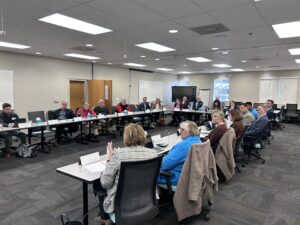
We often talk a lot about how powerful AI is. What once felt like a future concept has quickly become part of everyday life for businesses, schools and local governments. At the latest Business and Community Advocacy Council (BCAC) meeting, members discussed new developments in artificial intelligence policy, the expanding role of data centers and what these changes mean for Berks County.
Leading the conversation with updates from the state level, PA State Sen. Tracy Pennycuick shared how Pennsylvania is working to create clear and responsible rules for artificial intelligence. Her office is advancing bipartisan legislation that supports innovation while protecting residents from potential digital threats. One current example is Act 35, signed into law in July of 2025, which makes it illegal to use AI to create manipulated images or voice recordings of another person.
Despite this recent progress, Sen. Pennycuick noted that more work is needed. Cases involving AI‑generated explicit content and unsafe chatbot interactions have revealed gaps in existing laws. These incidents often involve situations that earlier legislation never anticipated, especially when it comes to protecting children online.
Beyond the legislative halls, the meeting also focused on how AI is becoming more common in workplaces and schools. A focus on learning to use new technology will be important for both businesses and workers. While AI tools can help with routine tasks and decision‑making, human oversight remains essential. Programs such as chatbots and digital assistants can support employees, but they are not meant to replace human judgment.
As AI continues to spread into classrooms and offices, there is an ongoing need for training and clear guidelines. Preparing employees, educators and business owners to use AI responsibly will help ensure that the benefits outweigh the risks.
Powering these advancements, however, requires more than just policy; it requires physical infrastructure. These facilities provide the computer power needed for AI and cloud-based services, and are becoming increasingly important across the state, but they also require significant energy and infrastructure planning.
To address these needs, state leaders are working to better define what qualifies as a data center and how these facilities fit into existing regulations. Clear definitions will help local governments prepare for future development and reduce confusion as demand continues to increase. To support municipalities, Sen. Pennycuick’s office is organizing tours and informational sessions for local officials. These events will give leaders a closer look at how data centers operate and how they might affect our communities.
Artificial intelligence and data center development are becoming part of daily life. State policy decisions will continue to influence how these technologies are used locally, affecting how students learn, how businesses grow and how communities plan for the future.
By staying informed about new policy issues, BCAC members gain a clearer view of how legislative decisions affect residents and employers in Berks County. As AI continues to evolve, these discussions will help the community prepare for new challenges and opportunities.
Save the Date: 2026 BCAC Meetings*
- April 10
- June 12
- Aug. 14
- Oct. 9
- Dec. 11
*Meeting dates are subject to change
About BCAC
The Business and Community Advocacy Council (BCAC), hosted by the Greater Reading Chamber Alliance (GRCA), serves as a collaborative network for public and private business professionals to engage in impactful advocacy. BCAC focuses on educating members about the policy-making process, identifying emerging policy issues and fostering active participation in local and statewide advocacy efforts. By promoting pro-business advocacy statements, BCAC empowers members of all sizes to navigate and shape the legislative landscape effectively. We do this by utilizing GRCA’s Pro-Business Advocacy Statements to guide the collaboration and coalition building that leads our advocacy work.
To learn more or get involved, contact Alex Roche, Director of Advocacy, at aroche@greaterreading.org.